Are lab-grown diamonds real? It's one of the questions we get most often. The answer is that a lab-grown diamond is a diamond grown in a laboratory. It's physically and chemically identical to a mined diamond, with the same material, the same crystal structure and the same hardness. The difference is its origin, and that's stated clearly on the IGI report that comes with the diamond.
In short
- A lab-grown diamond is pure carbon, like a mined diamond. It isn't an imitation.
- Moissanite and cubic zirconia are other stones that resemble diamond. A lab-grown diamond is something else.
- With the naked eye you can't see any difference. A gemmological laboratory can determine the origin with special equipment.
- The IGI report states that the diamond is laboratory-grown and shows the weight, colour, clarity and cut.
What do people mean by “real”?
When someone asks if a lab-grown diamond is real, they usually mean one of two things: is it a diamond, or just something that looks like one? And is it as good as a mined diamond?
The first question is about the material. A diamond is carbon crystallised in a very specific structure. A lab-grown diamond has the same structure. So it isn't glass, cubic zirconia or moissanite, and it isn't a coated diamond either. It's a diamond grown in a laboratory instead of formed in the earth.
The second question is about properties. Here the answer is that a lab-grown diamond and a mined diamond are equally hard, refract light the same way and are graded by the same four Cs. The only thing that sets them apart is where they come from.
Same material, same hardness
A lab-grown diamond has a hardness of 10 on the Mohs scale, the highest there is, just like a mined diamond. It stands up to daily wear, doesn't go cloudy over time and doesn't lose its colour. That's why lab-grown diamonds are used in engagement rings worn every day for many years.
The way it refracts light is also the same. It's the cut, not the origin, that determines how much a diamond sparkles. A well-cut lab-grown diamond and a well-cut mined diamond with the same grading look the same.
Lab-grown diamond, moissanite and cubic zirconia: not the same
Much of the confusion comes from the fact that several stones resemble diamond. They're still completely different:
- Lab-grown diamond: a diamond grown in a laboratory. Pure carbon with a hardness of 10, graded and certified as a diamond.
- Moissanite: silicon carbide, a different mineral. Hardness around 9.25, and it disperses light with more rainbow colours than a diamond.
- Cubic zirconia: zirconium dioxide, another synthetic stone that resembles diamond. Hardness around 8, and it isn't graded like a diamond.
Moissanite and cubic zirconia can be lovely gemstones, but they aren't diamonds. When you buy a lab-grown diamond, you're buying a diamond, just with a different origin.
Tip: If it just says “diamond” with nothing more, or “diamond-like”, ask. A reputable retailer always states clearly whether the stone is a lab-grown diamond, a mined diamond or another stone.
How is a lab-grown diamond grown?
A lab-grown diamond starts as a thin slice of diamond, a seed. In a machine that recreates the conditions in which diamonds form, new carbon builds up layer by layer on the seed. The two common methods are called CVD, where carbon from a gas settles on the seed in a vacuum chamber, and HPHT, where carbon is subjected to very high pressure and high temperature.
Afterwards the diamond is cut, polished and graded in the same way as a mined diamond. Which method was used says nothing about the quality in itself. What counts is the grading of the finished diamond.
Can you tell the difference?
No, not with the naked eye and not with an ordinary loupe either. A lab-grown diamond and a mined diamond with the same grading look the same on the hand. Even an experienced gemmologist needs special equipment to determine the origin.
Laboratories such as IGI use this kind of equipment to determine whether a diamond was grown or mined. That's why the certificate matters so much: it's the independent proof of what you actually have.
The difference between a lab-grown diamond and a mined diamond is the origin. The certificate tells you which one you have.
What does the IGI report say?
IGI (International Gemological Institute) is an independent gemmological laboratory. At Alpin & Gipfel, every centre diamond in our engagement rings has its own IGI report, and it comes in the box. Among other things, the report shows:
- that the diamond is laboratory-grown
- a report number unique to the diamond
- shape, carat weight and measurements in millimetres
- colour grade and clarity grade
- polish and symmetry
You can check the report number yourself on IGI's website. You'll see the same details as on the paper. Read more about the four Cs and how to read the report on our page about lab-grown diamonds.
Value and resale
We don't recommend buying a lab-grown diamond as an investment. You buy an engagement ring to wear it, because you like it and because it means something. That's what we make our rings for.
What you get is a diamond with the same properties as a mined diamond, an independent certificate and a price shown openly on every ring. With us, engagement rings cost from €1,390 with a 0.5 ct lab-grown diamond, and a 1 ct solitaire from €1,580. To learn more about what determines the price, read How much does an engagement ring cost?.
What to ask before you buy
- Is the stone a lab-grown diamond? The answer should be clear, and it should be on the certificate.
- Which certificate is included? Ask for the report number and check it yourself.
- What's the grading? Colour, clarity and weight should be stated for the diamond you're buying.
- What happens if the ring doesn't fit or isn't liked? With us you have a 60-day open purchase, and we pay the return shipping.
- Can I see the ring first? With us you can book a personal viewing in Oslo.
Frequently asked questions
Is a lab-grown diamond a real diamond?
A lab-grown diamond is a diamond grown in a laboratory. It has the same material, crystal structure and hardness as a mined diamond. The difference is where it comes from.
Can a jeweller tell it's a lab-grown diamond?
Not with the naked eye. Determining the origin takes special equipment, like the kind laboratories such as IGI use. The IGI report states that the diamond is laboratory-grown.
Does a lab-grown diamond lose its shine?
No. It's a diamond crystal and doesn't change over time. If it looks dull, that's grease and dust on the surface, and it'll be like new with lukewarm water, mild soap and a soft brush.
Is a lab-grown diamond the same as moissanite?
No. Moissanite is silicon carbide, a different mineral. A lab-grown diamond is pure carbon, like a mined diamond.
Can I see the diamond before I buy?
Yes. You can book a personal viewing in Oslo, where we go through the rings, the diamonds and the certificate together, with no obligation.
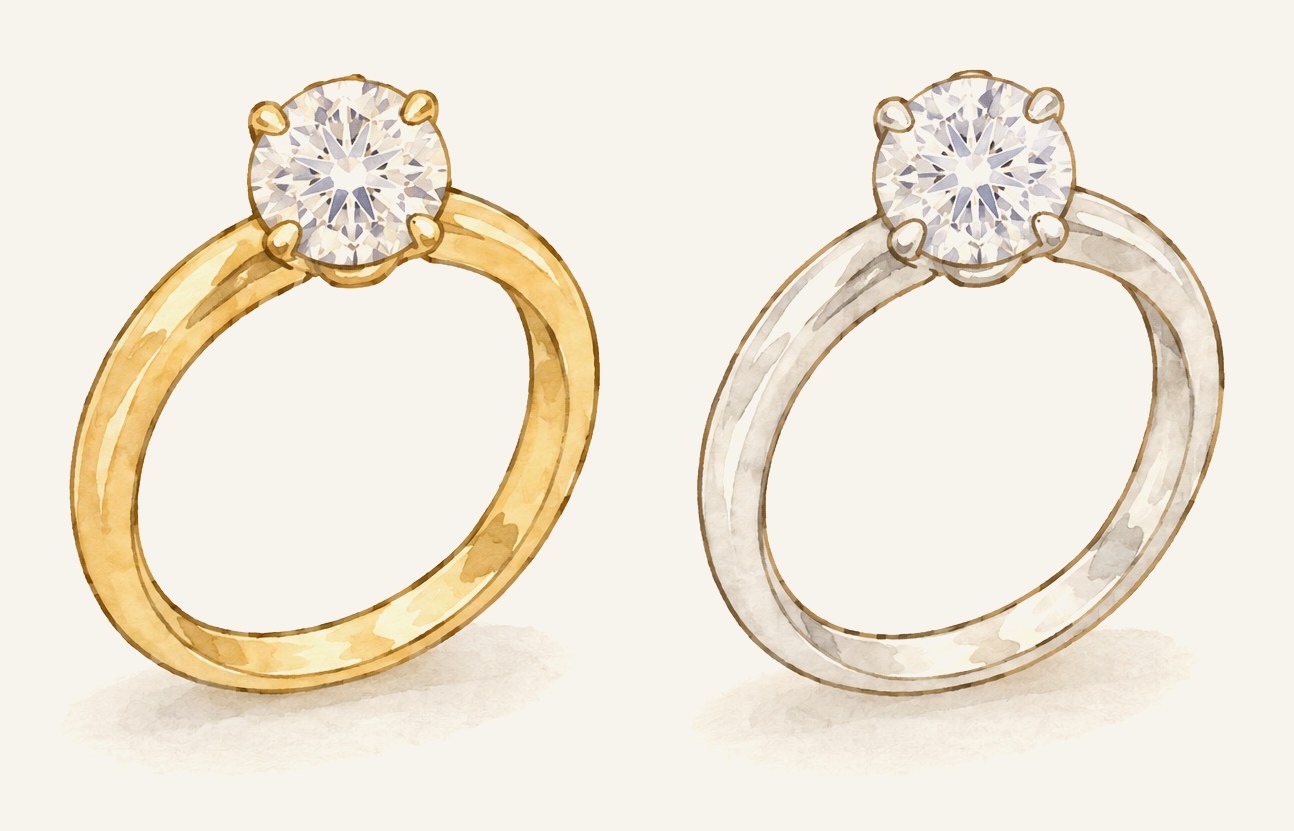
Want to see how the lab-grown diamonds look in a ring? See all engagement rings with lab-grown diamonds, for example the oval Aurora or the round Vivienne.
Written by Moeez K., founder of Alpin & Gipfel. If you talk to us by email or phone, he's usually the one you'll meet. Meet the team.